
A Roadmap for Navigating Crisis: How to Survive in a Post-Globalization World?
June 16, 2026
The global economic order (Pax Americana), which for decades rested upon the pillars of U.S. maritime security, cheap capital, and a young workforce, has suffered a structural collapse. With the U.S. Navy retreating from its role as the guarantor of trade routes, global commerce has shifted from a free benefit to a costly financial burden. Simultaneously, the aging of the global population—most notably China’s demographic crisis—has dried up the pool of cheap capital and brought the traditional "global factory" model to an end. In this post-globalization era, characterized by structural inflation, the North American bloc is evolving into a self-sufficient "fortress economy," bolstered by the advantages of cheap energy and re-industrialization. In the coming decade, supply chain resilience and resource security will replace the frictionless free trade of the past.
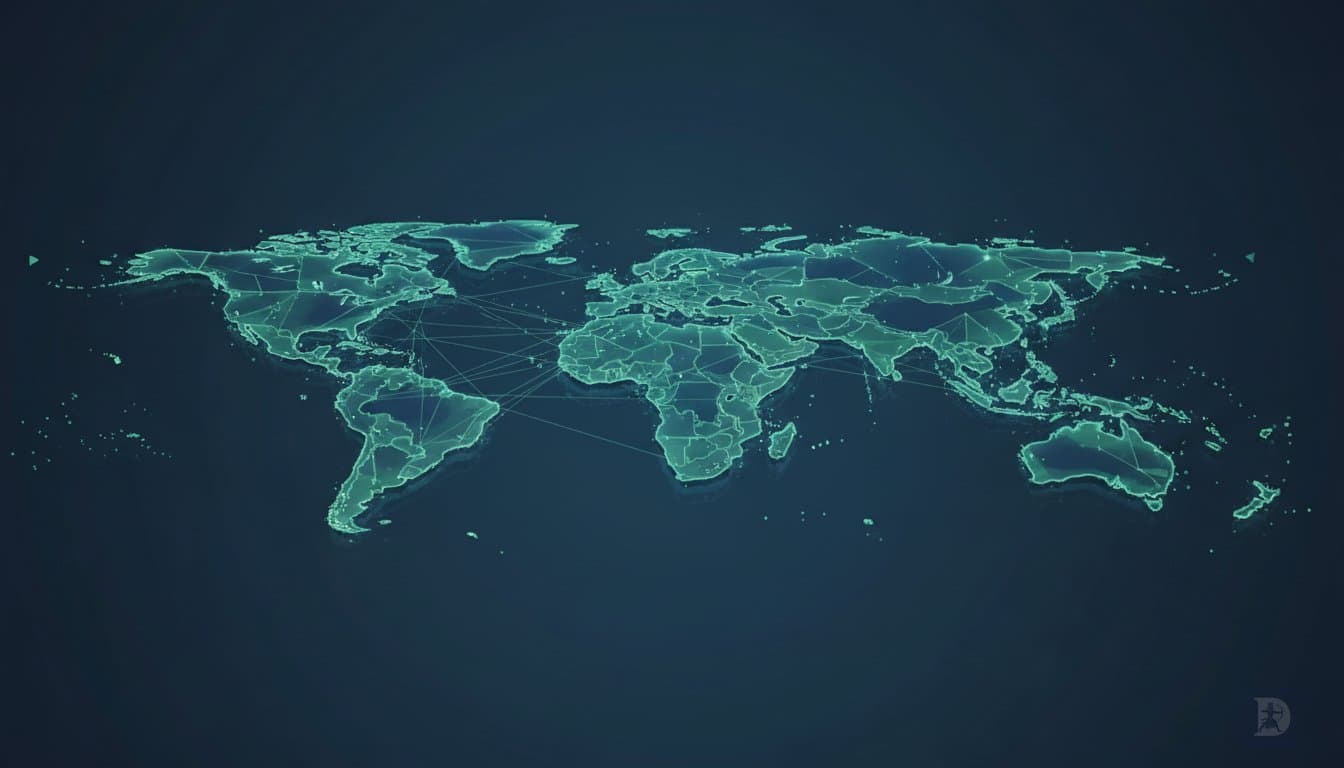
Foreword: The world is on the cusp of an unprecedented paradigm shift; an era in which the rules of the international economic game are being rewritten. The following analysis is a precise dissection of why a stable era has ended and a new age of geopolitical, demographic, and industrial equations has begun.
Over the past seventy-five years, the global economy has operated under a specific and fragile architecture: Pax Americana (the American Peace, or a global order guaranteed by United States security). This system was not a natural evolution of markets, but a strategic geopolitical bribe. By guaranteeing the security of global shipping lanes and opening its domestic market to allies, the United States encouraged a model of global trade designed to contain the Soviet Union. Today, that incentive structure has collapsed. We are not witnessing a simple cyclical recession, but a structural "decoupling" of the global order, driven by demographic decline, the retreat of maritime hegemony, and the massive, inflationary process of re-industrialization within the North American bloc.
1. The End of "Free Transit" and Maritime Hegemony
The role of the U.S. Navy as the guarantor of "freedom of navigation" is effectively coming to an end. With the active fleet shrinking from nearly 600 ships in the 1980s to approximately 293 in 2025, the United States no longer possesses the operational capacity—or the political will—to police all strategic maritime chokepoints. According to congressional reports, the target of 381 ships faces annual budgetary challenges of $35.8 billion and severe constraints in shipbuilding infrastructure.
As the "deterrence discount" (the natural reduction in trade security costs due to the fear of U.S. military power) fades, the cost of global trade is shifting from a free public good to a private financial burden. Shipping companies are now internalizing private security costs and exorbitant insurance premiums. In vital arteries like the Strait of Hormuz and the Red Sea, war risk premiums have become a permanent tax on energy and essential commodities.
2. Demographic Collapse and the Tripling of Capital Costs
The global financial system is reeling from the "Great Demographic Reversal." For three decades, the Baby Boomer generation created a capital surplus, driving interest rates toward zero. As this cohort transitions from net savers to net consumers in retirement, the global pool of loanable funds is evaporating. The neutral interest rate (r*—the rate at which the economy is neither stimulated nor restrained) has shifted from the zero floor of the 2010s to a structural range of 2.5 to 3.5 percent; this tripling of capital costs is pushing emerging markets dependent on cheap dollar-denominated debt toward a debt crisis.
3. The Chinese Dissolution and the Liquidation Phase
China’s demographic profile is not only aging but collapsing. Independent models suggest that China’s population has been over-estimated by more than 100 million people. The "world’s factory" is no longer a strategic choice, but a legacy of a demographic window that has closed. Investors should view China’s current export surge not as a sign of strength, but as a "liquidation phase" (an attempt to mass-produce and quickly monetize capacity before its economic value collapses); an effort to utilize excess industrial capacity before labor costs and the burden of eldercare render production uneconomical.
4. The North American Energy Advantage
While the rest of the world faces energy volatility, the North American bloc has inadvertently created a structural cost moat. The U.S. shale oil boom has created a permanent decoupling in natural gas and petrochemical pricing. By utilizing ethane as a byproduct of shale oil, American producers enjoy ethylene production costs $200 to $400 per ton cheaper than naphtha-based competitors in Asia and Europe.
5. The Bottlenecks of Re-industrialization
The goal of expanding the U.S. power grid by 50 percent is tethered to the physical limitations of the steel industry. There is a critical bottleneck in the supply of Grain-Oriented Electrical Steel (GOES—the key alloy required to build transformer cores). With transformer lead times increasing to over 100 weeks, the timeline for re-industrialization is determined not by political ambition, but by the capacity of physical infrastructure.
6. Outlook: Structural Inflation and the Fortress Economy
The coming decade will be defined by structural inflation (9 to 15 percent), as the global economy must digest the heavy costs of reshoring supply chains, the energy transition, and labor shortages. North America is emerging as a "Fortress Economy" (a self-sufficient, impenetrable system focused on domestic supply chain security); it is the only region with the scale necessary to absorb the trillions of dollars fleeing the volatility of the old global order.
7. Conclusion: The Transition to a Post-Globalization World
Ultimately, the collapse of the previous order does not mean the end of the world, but a difficult yet definitive transition to a new economic geography. Governments and businesses that continue to set their strategies based on the assumptions of past decades—namely free maritime transit, stable energy, and cheap capital—will face devastating risks. In this new era, superiority belongs to those who redefine their models based on physical supply chain security, resource resilience, and adaptation to structural inflation. The golden age of frictionless free trade is over; now is the time for survival and prosperity within the shelter of "economic fortresses."