
Beyond Hormuz: Re-architecting Global Supply Chains in an Era of Geopolitical Friction
June 9, 2026
With the decline of the Strait of Hormuz’s strategic dominance following 2026, trade flows are pivoting toward terrestrial corridors. This analysis examines the capital influx into the Trans-Caspian Middle Corridor and Turkey’s Development Road as the new backbone of East-West connectivity.
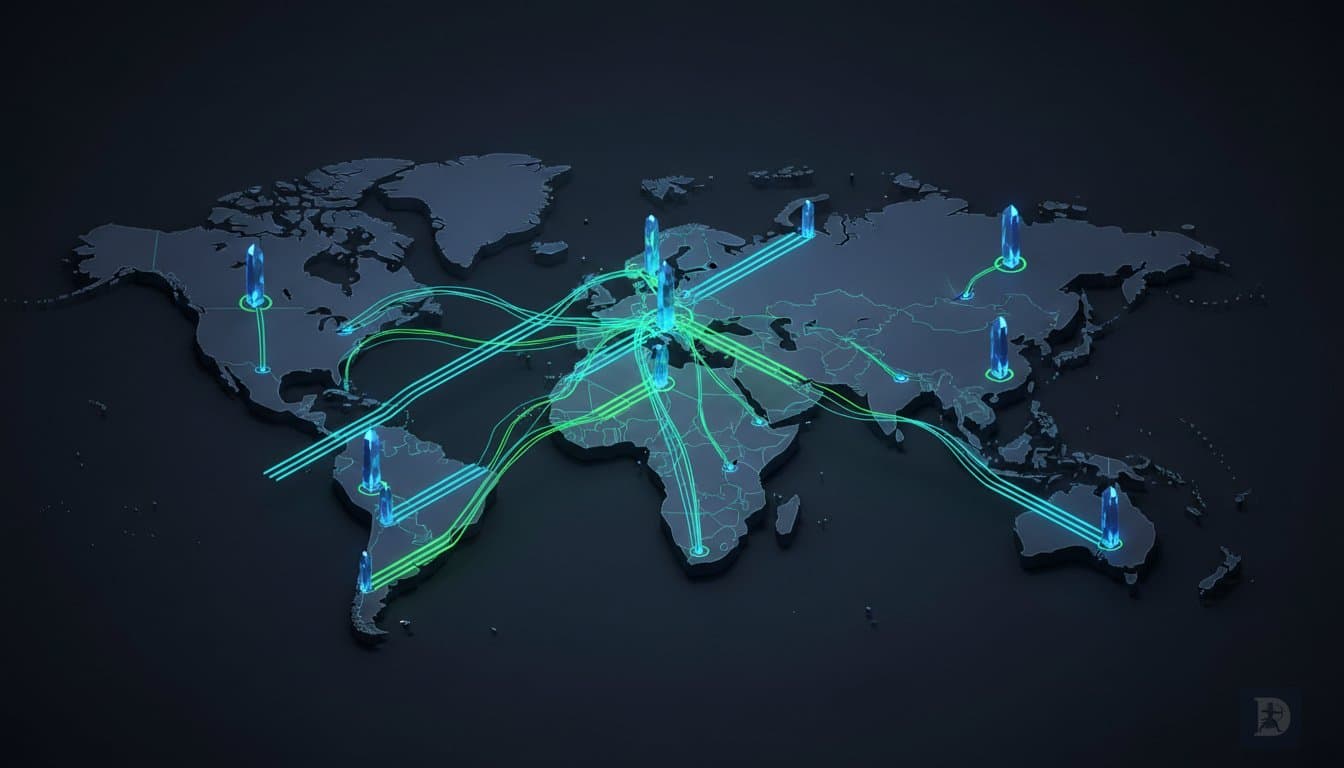
The End of Straits-Dependency
The events of 2026 marked a permanent pivot point in global logistics. With the Strait of Hormuz effectively neutralized as a reliable maritime chokepoint, the maritime-centric model that defined 20th-century trade has been relegated to a strategic liability. Multinational corporations are now aggressively shifting toward terrestrial networks that, while structurally more expensive, offer the predictability required in a fractured geopolitical landscape.
The Middle Corridor: The Modern Silk Road
Capital influx from China and the European Union into the Trans-Caspian Middle Corridor has surged. Transcending Kazakhstan, the Caspian Sea, the Caucasus, and Turkey, this route is no longer a secondary option but a core requirement for supply chain continuity. Over $10 billion in capital has been committed to port infrastructure in Aktau and Baku, increasing container throughput capacity by 40% compared to 2025 benchmarks.
The Development Road and the Rail Revival
Turkey has positioned itself as the definitive transit hub through its Development Road project. This rail network, originating from the Persian Gulf and traversing Iraq to link with the Turkish rail grid and Europe, has effectively bypassed traditional Iranian transit routes. Substantial investments by Gulf Cooperation Council (GCC) states into the development of the Port of Faw and its integration into international rail grids represent a profound paradigm shift in logistics power.
- Risk Diversification: A transition from single-chokepoint reliance to redundant, multi-modal terrestrial networks.
- Infrastructure Diplomacy: The dominance of Chinese and Turkish state-backed consortia in financing critical infrastructure.
- Energy Logistics Shift: Moving away from reliance on maritime energy transport in favor of hardened rail and pipeline corridors.
Global supply chains are no longer optimized for the lowest transport cost; they are being rewritten for the lowest geopolitical risk.