
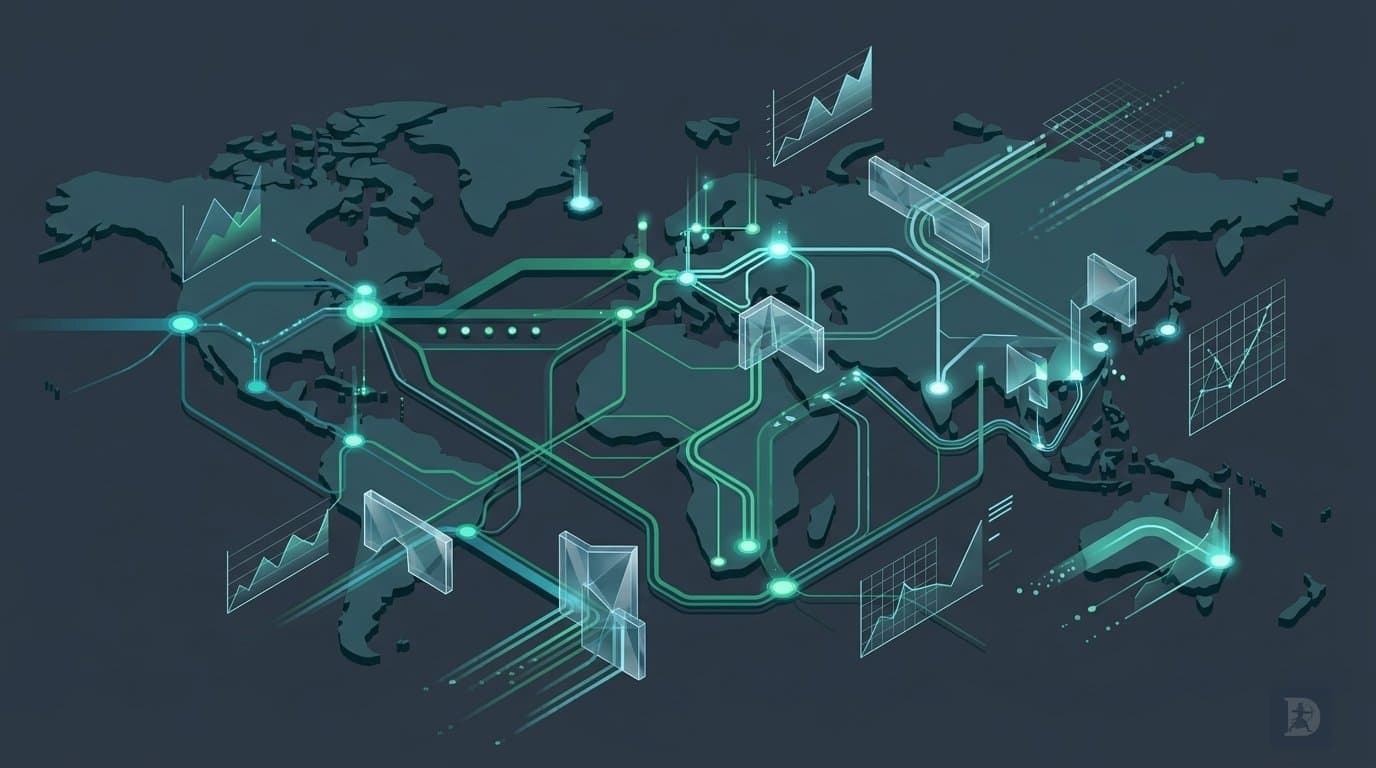
The spiral of escalating tensions in the Middle East—from maritime friction in the Strait of Hormuz to localized exchanges of fire and border tensions in the Levant and Jordan—is often analyzed solely through a military lens. However, a structural and data-driven analysis reveals that these crises function as a systematic war of attrition; a process aimed at the long-term realignment of global trade routes, investment flows, and geoeconomic leverage.
At the core of this dynamic lies the strategic doctrine of "Clear and Rebuild"; a concept rooted in the "Geoeconomic Containment" strategies articulated by think tanks such as the Council on Foreign Relations (CFR) and the Center for a New American Security (CNAS). By leveraging controlled instability, Washington elevates the risk premium of key infrastructure corridors to a level that renders investment by Chinese state capital uneconomical. The ultimate objective is twofold: first, to sever the access of China’s Belt and Road Initiative (BRI) to African and Middle Eastern markets via Israel; and second, to clear strategic geography of hostile actors to pave the way for Western financial and development institutions to monopolize post-war reconstruction.
The Collapse of the Sino-Israeli Corridor and the Contraction of Trade Arteries
For over a decade, Beijing had defined Israel as a critical geoeconomic node in its transnational connectivity plans. According to structural analyses by The Washington Institute for Near East Policy (WINEP), this strategy was predicated on transforming Israel into a high-tech bridge and a land bridge connecting the Red Sea to the Mediterranean (bypassing the Suez Canal and the high-risk Bab el-Mandeb Strait). The cornerstone of this infrastructure was the Eilat-Ashdod/Haifa corridor, which was solidified in 2015 when the Shanghai International Port Group (SIPG) was awarded a 25-year concession to operate the new Haifa port.
However, recent instabilities have severely disrupted these strategic calculations through three primary channels:
- Total Logistical Blockade of Eilat Port: Maritime traffic at the Port of Eilat has effectively ceased due to attacks and a naval blockade. According to official statistics, the number of vehicles offloaded at the port dropped to zero in 2024 (down from 150,000 in 2023), while ship arrivals plummeted from 134 in 2023 to just 16 in 2024 and 6 in the first half of 2025—a trend that ultimately led to the port's complete operational closure in July 2025. This collapse has nullified the economic justification for the rail-based land bridge to Ashdod.
- Sharp Decline in Foreign Direct Investment (FDI): Although Israel’s high-tech sector demonstrated relative resilience by generating 317 billion shekels in 2024 (equivalent to 17.3% of GDP), the overall investment climate has chilled significantly. According to UNCTAD reports, Greenfield FDI projects in Israel fell to their lowest level in 20 years, with only 19 projects recorded in 2024—a dramatic decline from 76 projects in 2022.
- Pressure to Sever Technological Cooperation with China: Leveraging Israel’s acute security dependency, the United States has imposed stringent screening mechanisms on foreign investments. These diplomatic pressures have effectively pushed Chinese capital out of critical Israeli infrastructure (such as the Ashdod desalination plant) and reduced Chinese FDI flows into Israel—which peaked at $16.2 billion between 2016 and 2018—to less than $1 billion in recent years.
The "Clear and Rebuild" Doctrine and the Phoenix Effect
The strategic hypothesis of the "Clear and Rebuild" doctrine is predicated on the principle that U.S. military and diplomatic maneuvers are essential precursors to economic re-entry. Under the macroeconomic model of the "Phoenix Effect"—first formulated by prominent economist Guillermo Calvo and later developed by the Brookings Institution in analyses of post-crisis reconstruction—the systematic destruction of infrastructure and political instability creates a foundation for high-yield reconstruction cycles contingent upon regulatory reforms. This approach bears a strong structural affinity with Naomi Klein’s "The Shock Doctrine" in the field of political economy of crisis; a framework wherein Washington, by displacing Chinese state capital from the market, is delineating a new economic territory.
In a conservative estimate, the World Bank puts the cost of post-war physical reconstruction in affected Levant countries (such as Syria, where one-third of physical capital has been destroyed) at over $216 billion; a figure nearly ten times the nominal GDP of these nations. Securing this volume of capital is beyond local financial capacity, effectively opening the door for intervention by Western development institutions.
While Chinese capital is retreating due to the inherent conservatism of Beijing’s state-led models, the G7-led "Partnership for Global Infrastructure and Investment" (PGII), with a mandate to mobilize $600 billion by 2027, is positioning itself to fill this vacuum. Although only about $60 billion of this target has been realized as of 2024, Western investment frameworks are designed to enter high-risk post-war environments and tie reconstruction capital to market liberalization and logistical monopolies.
The Hormuz Attrition Game: Asymmetric Costs and Strategic Shields
The confrontation in the Strait of Hormuz functions as a classic game of attrition. Based on Kenneth Oye’s seminal theory of "Cooperation under Anarchy" and game-theoretic models of mutual attrition (such as Robert Axelrod’s theory of the evolution of cooperation), compromise occurs only when the mutual cost of sustained tension exceeds the value of the contested resource. Currently, the United States, Iran, and Saudi Arabia are facing highly asymmetric incentive structures and strategic shields that are redefining the balance of power in this vital artery:
| Strategic Actor | Asymmetric Costs and Vulnerabilities | Strategic Shields and Resilience Tools | Key Geoeconomic Levers |
|---|---|---|---|
| Islamic Republic of Iran | Erosion of foreign exchange reserves under sanctions; forced discounts on oil exports to China to compete with Russian Urals; risk of economic self-sabotage in the event of a total closure of the Strait of Hormuz. | Regional asymmetric deterrence network; low-cost, high-yield maritime defense doctrine; extensive experience in circumventing Western sanctions and financial systems. | Physical disruption capability in the Strait of Hormuz and Bab al-Mandab; capacity to trigger sudden spikes in global maritime insurance and energy logistics costs. |
| United States of America | Unprecedented depletion of Strategic Petroleum Reserves (SPR) to the lowest level since 1983 (367 million barrels); risk of transmitting energy-driven inflationary shocks to the domestic economy. | Energy independence through accelerated shale oil production; dollar hegemony in global trade settlement; Western multilateral investment tools (e.g., PGII). | Control over international financial arteries; ability to re-engineer alternative trade corridors and structurally isolate emerging rivals. |
| Saudi Arabia | Increase in fiscal breakeven oil price to $96.2; liquidity trap resulting from the concentration of Public Investment Fund (PIF) assets in illiquid domestic projects (e.g., NEOM). | OPEC+ spare oil production capacity (5.4 million barrels per day); accumulated foreign exchange reserves; financial strategic depth to absorb short-term supply shocks. | Management of global hydrocarbon supply via OPEC+; pivotal role in emerging transit corridors (e.g., IMEC) as a regional logistics hub. |
- Iran’s Financial Vulnerability: Iran’s capacity to sustain a prolonged blockade of the Strait of Hormuz is severely constrained by structural limitations, as halting transit would simultaneously paralyze the country’s own export arteries. Furthermore, Russia’s forced pivot to the East has turned Moscow and Tehran into direct competitors in Asian markets. Heavily discounted Russian Urals crude competes directly with Iranian light oil, compelling Tehran to offer persistent discounts to retain its Chinese buyers, which significantly depletes its financial reserves.
- U.S. Strategic Constraints: Conversely, the United States faces a major structural vulnerability: the severe depletion of its Strategic Petroleum Reserve (SPR). Following an unprecedented drawdown of 180 million barrels in 2021 and 2022, SPR inventories fell to approximately 367 million barrels in 2024—the lowest level since 1983. The net import coverage of these reserves has dropped to under 40 days. This collapse of the "energy shield" limits Washington’s appetite for high-risk maneuvers, forcing the U.S. to rely on OPEC+ spare production capacity (equivalent to 5.4 million barrels per day in late 2024) to prevent a global inflationary shock.
The Liquidity Trap in Gulf Sovereign Wealth Funds
Sovereign Wealth Funds (SWFs) of the Gulf Cooperation Council (GCC) countries, with $4.2 trillion in assets, represent a massive source of financial leverage. Based on the analytical frameworks of the Peterson Institute for International Economics (PIIE) regarding the geopolitics of SWFs, a prolonged crisis of attrition is exposing these institutions to the threat of "asset-liability mismatch." In recent years, these funds (particularly Saudi Arabia's Public Investment Fund - PIF) have shifted their capital from liquid international assets toward long-term, illiquid domestic projects (such as the NEOM project); to the extent that the PIF has concentrated approximately 83 percent of its $913 billion in assets domestically, deploying over $57 billion into local projects in 2024 alone.
In a protracted attrition scenario, given that Saudi Arabia’s fiscal breakeven oil price for 2024 has risen by 19 percent year-on-year to $96.2 per barrel, any decline in hydrocarbon revenues will force these nations to either liquidate their foreign assets in Western markets at discounted prices or issue high-cost debt to cover budget deficits. This dynamic effectively leads to the transfer of high-quality assets to Western investors and reinforces the hegemony of Western capital.
The International North-South Transport Corridor (INSTC) in the Trap of the "Clear and Rebuild" Doctrine: The Geoeconomic Freezing of Iran
The direct impact of the "Clear and Rebuild" doctrine on Iran’s national interests is manifested most significantly in the International North-South Transport Corridor (INSTC) megaproject. This corridor, which was defined as Iran’s vital artery for bypassing sanctions and connecting India and Russia to Europe, is now facing structural challenges under the direct influence of rising regional risk premiums and the United States' containment strategy:
- Freezing of Foreign Investment in Key Infrastructure: At least $1.6 billion in investment is required to complete the Rasht-Astara railway (the missing link of the corridor's western branch). Although Russia has committed to providing a €1.3 billion loan for this project, the escalation of geopolitical risks and severe currency fluctuations have drastically slowed the allocation of these funds. Simultaneously, India, as a strategic partner in the Chabahar Port, has refrained from comprehensive development of the port under pressure from the U.S. sanctions regime and rising maritime risks in the Sea of Oman; consequently, Chabahar's container traffic volume in 2024 remains well below its nominal capacity of 8.5 million tons.
- Surge in Risk Premium and the Flight of Shipping Lines: The "cleansing" doctrine has eroded the competitive advantage of Iran's transit tariffs by driving up hull and war risk premiums for vessels in the Persian Gulf and the Sea of Oman by 400 percent. For major logistics firms, route security takes precedence over speed; as a result, the flow of goods is being diverted toward alternative corridors.
- Strengthening of Rival Corridors and Iran’s Geoeconomic Isolation: While the INSTC struggles with financial and geopolitical obstacles, rival routes such as the Middle Corridor—by bypassing Iran and Russia—have secured extensive financial support from Western entities, including the European Bank for Reconstruction and Development (EBRD). This has led to a 65 percent year-on-year growth in transit volume for the Middle Corridor in 2024, while Iran’s share of East-West container transit has been effectively sidelined.
Strategic Outlook: Re-engineering New Economic Frontiers
Data from the International Monetary Fund (IMF) reveals a stark asymmetry in economic resilience between the United States and Middle Eastern oil exporters. The IMF revised U.S. economic growth for 2024 upward to 2.7 percent, driven by energy independence and robust domestic consumption, while growth forecasts for MENA oil exporters were downgraded to 2.1 percent due to OPEC+ production cuts and the skyrocketing costs of maritime insurance (a 400 to 500 percent increase).
As Robert Blackwill and Jennifer Harris argue in their seminal work for the Council on Foreign Relations, "War by Other Means: Geoeconomics and Statecraft," geopolitical shocks erode the physical and logistical infrastructure of Middle Eastern producers while rewarding the financial and energy autonomy of the U.S. system. By maintaining a state of controlled attrition, Washington is executing an economic doctrine of "clear and seize." By displacing Chinese state capital and exhausting regional actors, the United States is re-engineering new economic frontiers where the temporary disruption of existing trade corridors serves as an unavoidable prerequisite for the long-term dominance of Western capital.